
Built on four influences
The Steps to Shine Curriculum represents an integration of evidence-informed practices, established early childhood theories, and national learning frameworks. Designed for children from birth to six years, it reflects our belief that learning flourishes within relationships built on love, care, and safety.
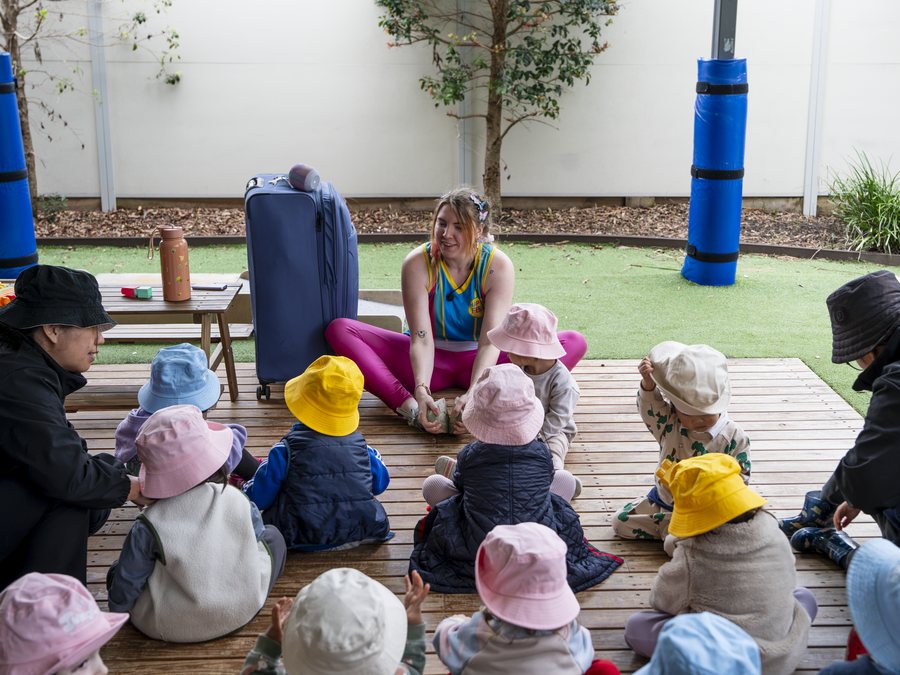
It is delivered through play-based learning, which lets educators personalise experiences for every child. Four influences shape it, and each one does a different job.
Learning beyond the room
Some of the most exciting parts of the curriculum happen outside the room, and families are welcome to come along. Watch the OWNA app for upcoming outings and volunteer requests.

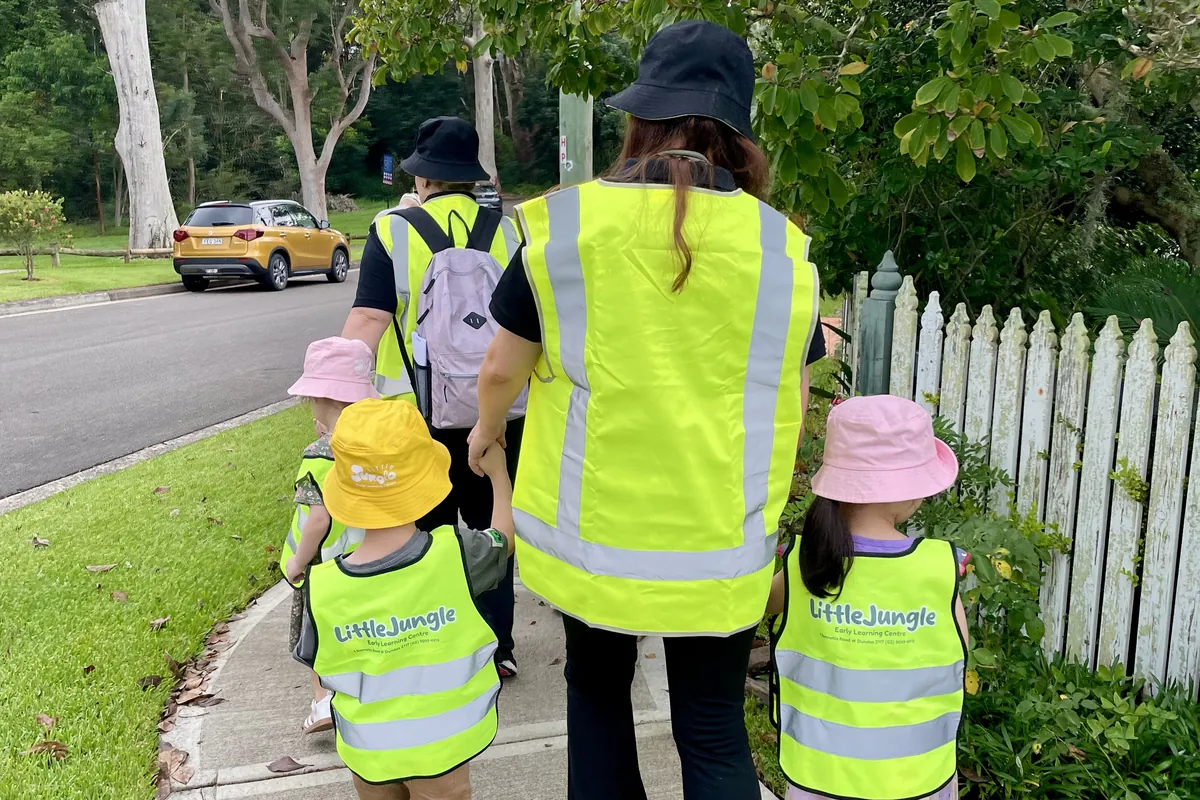
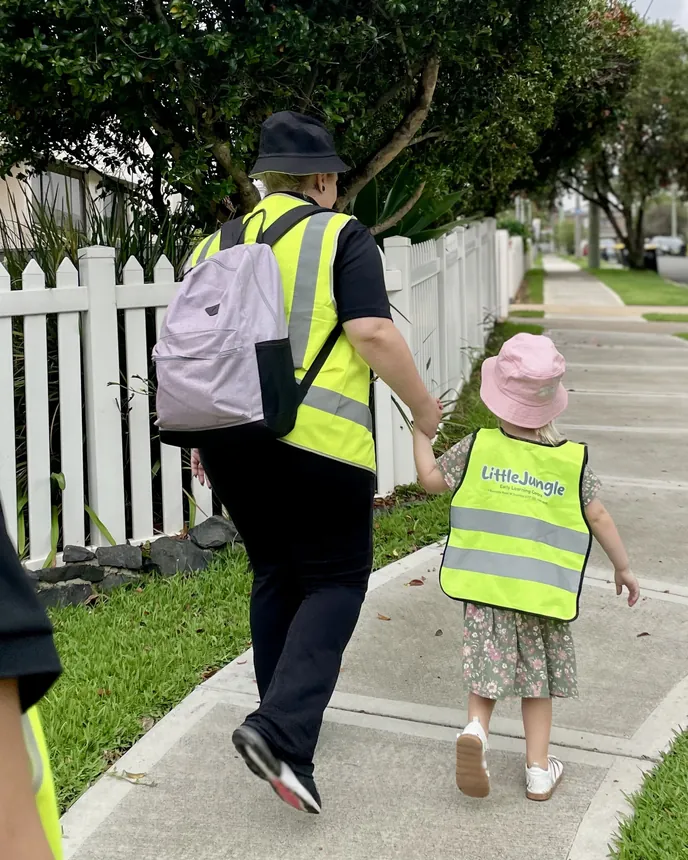
Excursions and outings
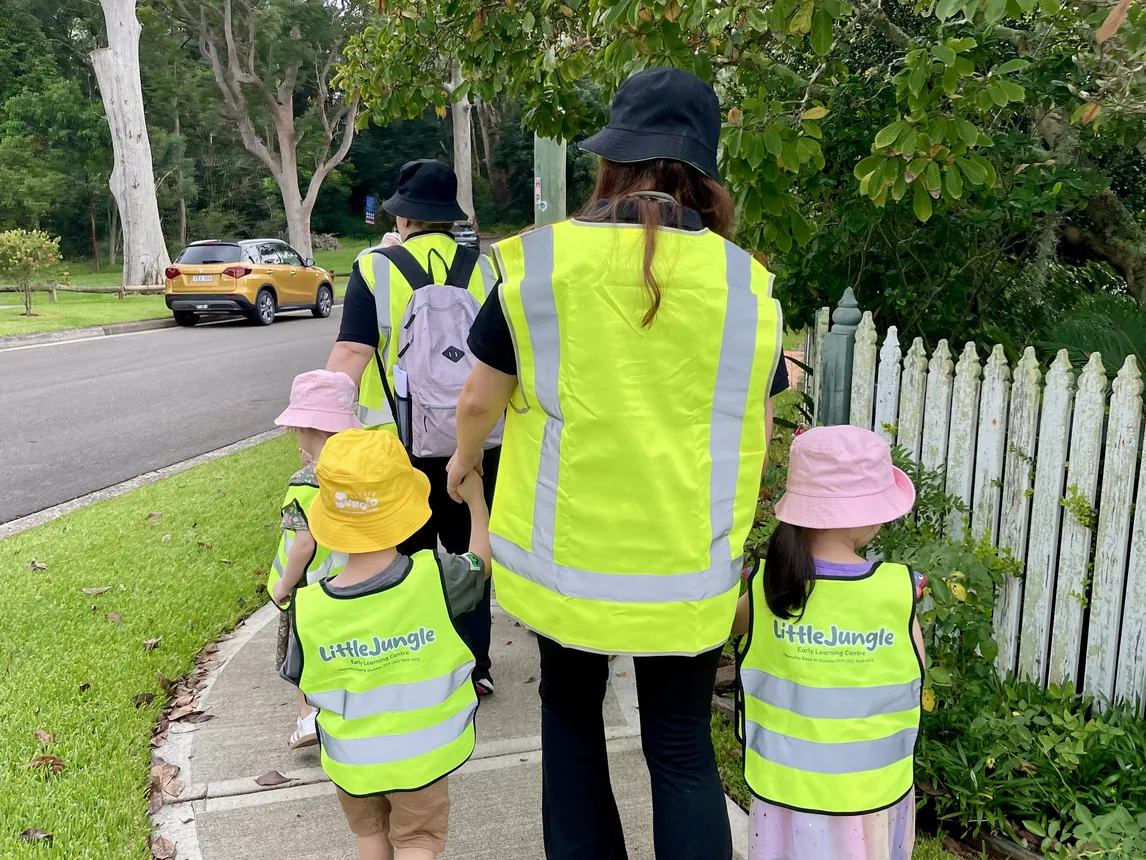
Excursions engage children with the wider community. Written authorisation is required for every excursion, each one has a detailed risk assessment completed beforehand, and we maintain higher-than-standard staff-to-child ratios on all outings.
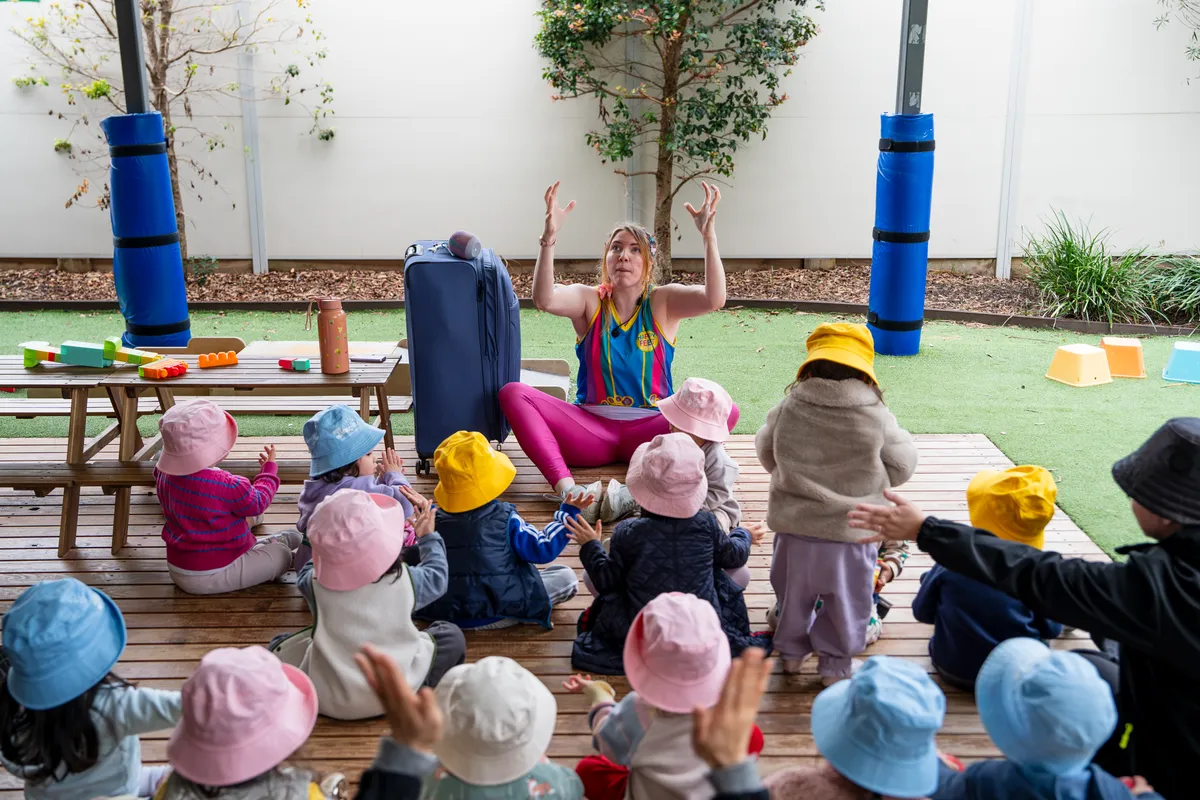
Incursions and visitors
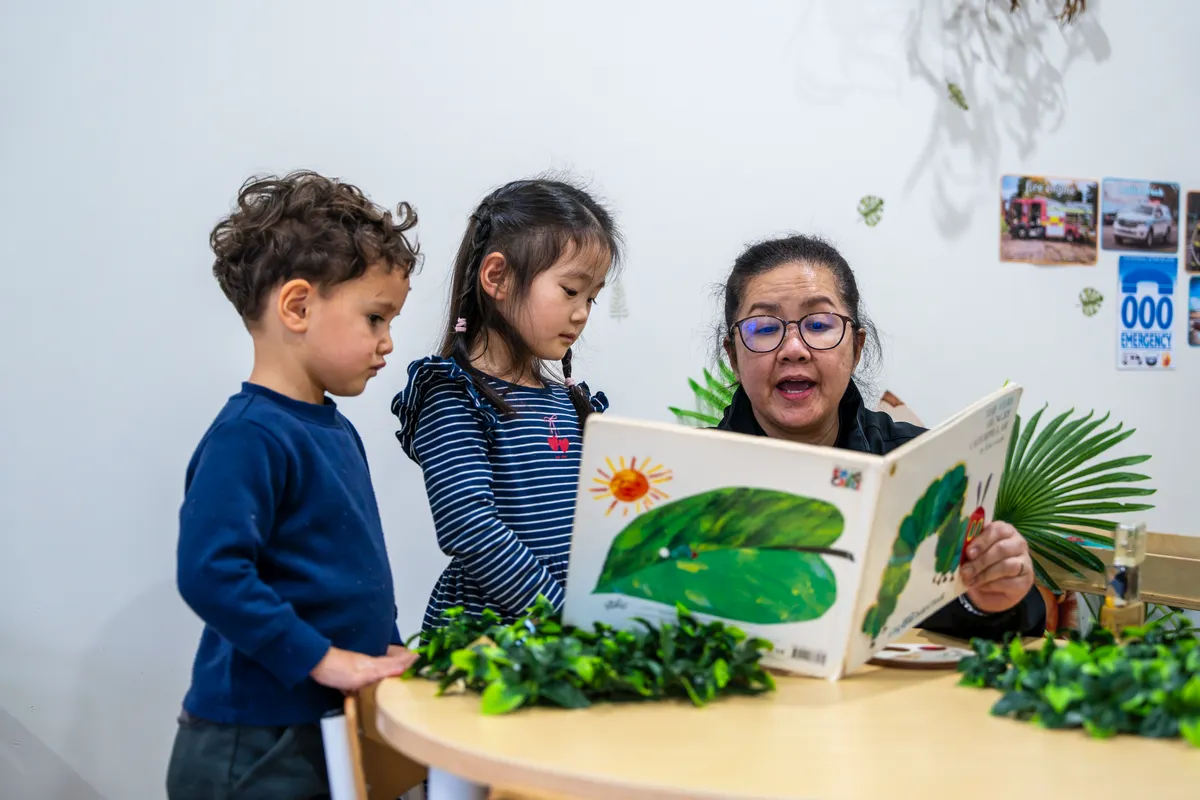
We welcome selected visitors from a range of backgrounds to enrich your child's learning. Every visitor taking part in an incursion holds a valid Working With Children Check. Incursions are included in the daily fee and never billed as an extra.
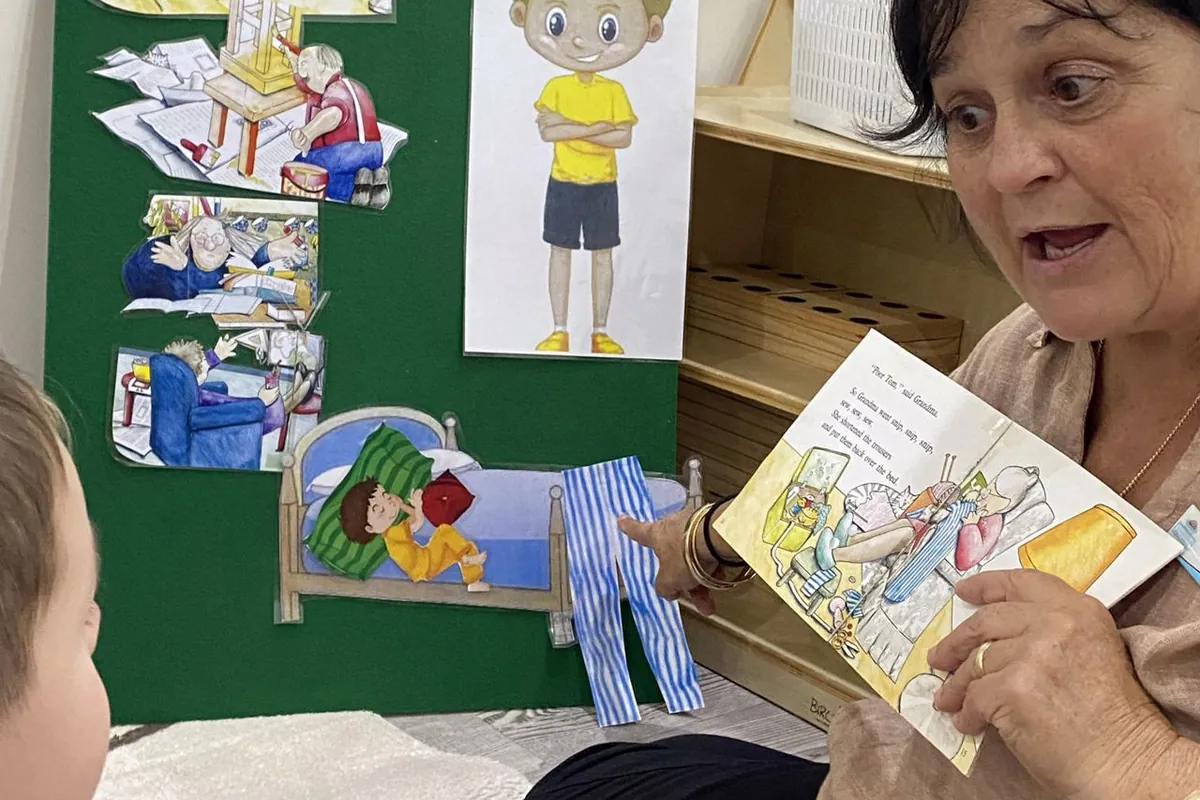
School personnel visit
Staff from local primary schools come in and spend time with the Jungle Explorers. Meeting a real teacher, in a room they already feel safe in, turns school from an abstraction into somewhere they have questions about, and the children get to ask them before their first day rather than on it.
Four influences, one curriculum
Most centres name one approach, or two. We draw on four, because each answers a different part of what a young child needs.
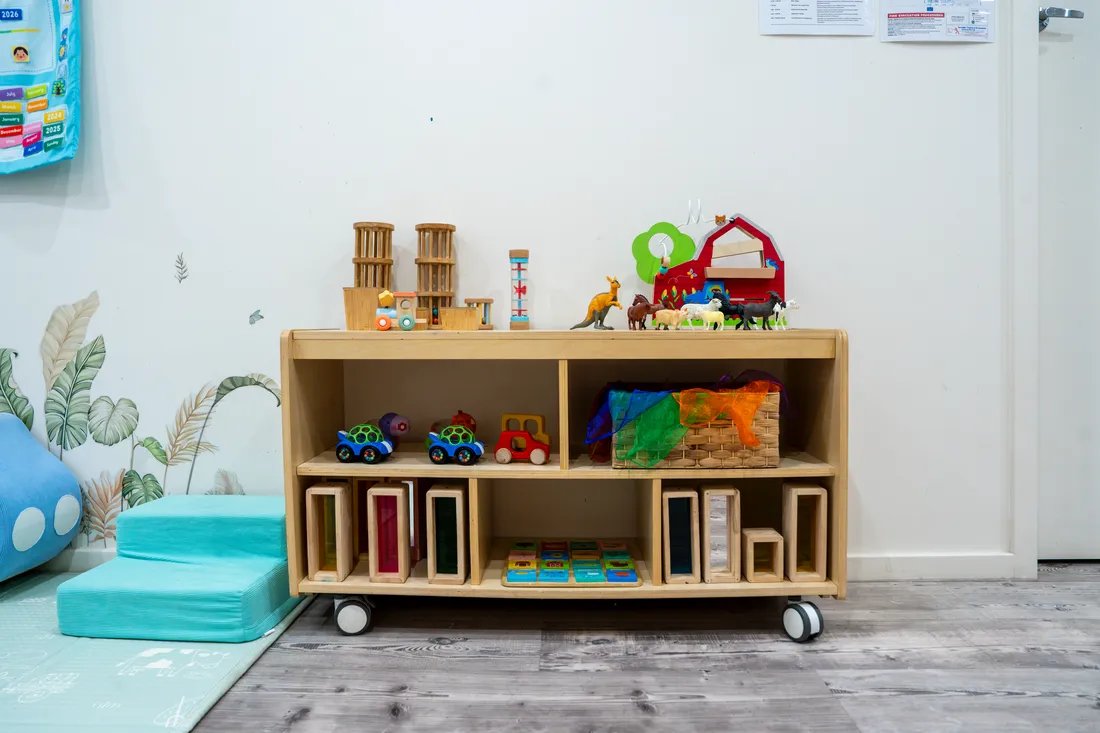
Montessori
Prepared environments with real materials children can reach and choose for themselves. Practical life tasks build concentration, fine motor control and the confidence that comes from doing something without help.
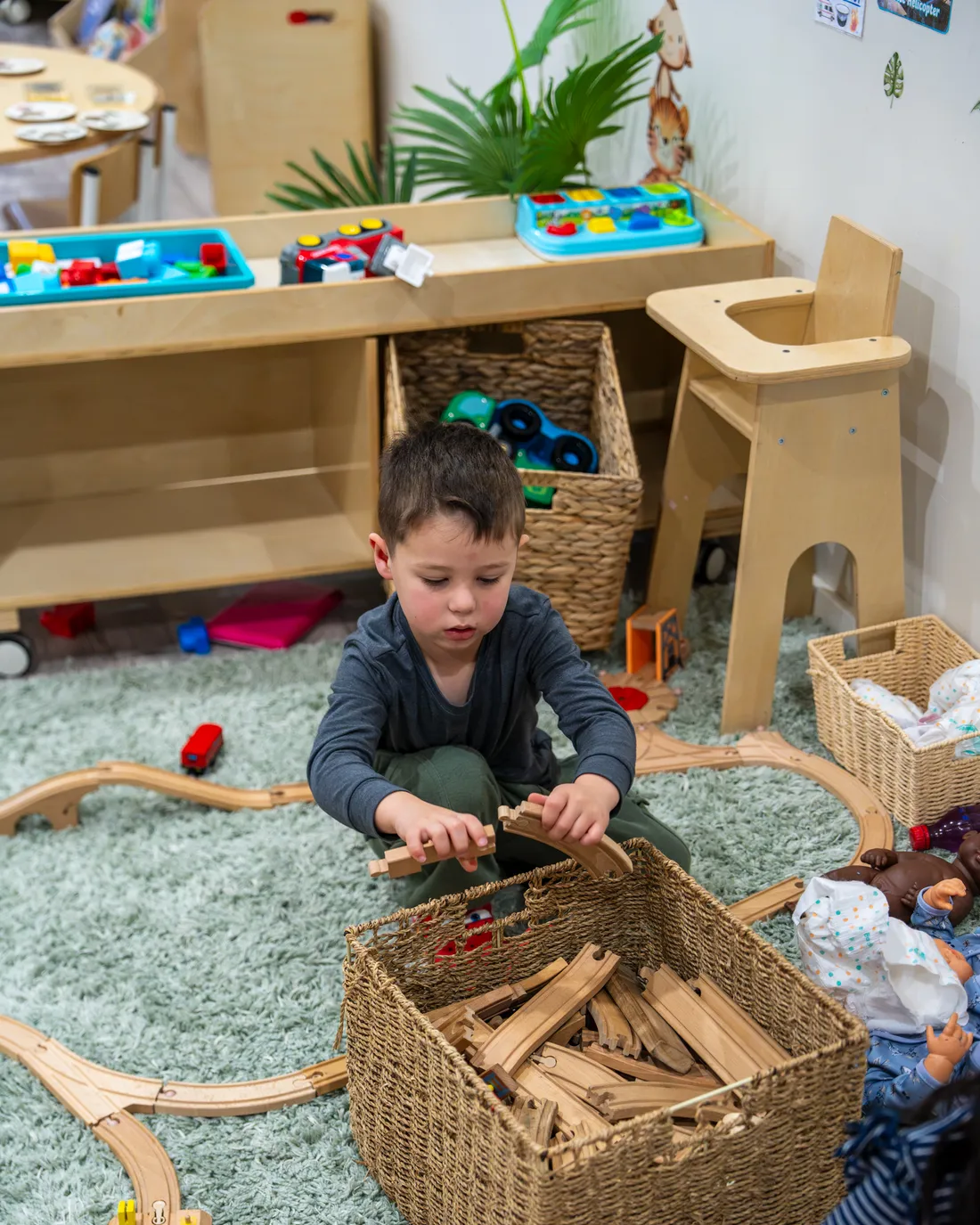
Reggio Emilia
The child treated as capable and competent, and as the protagonist of their own learning. Their questions drive the program, and their work is documented, revisited and taken seriously.
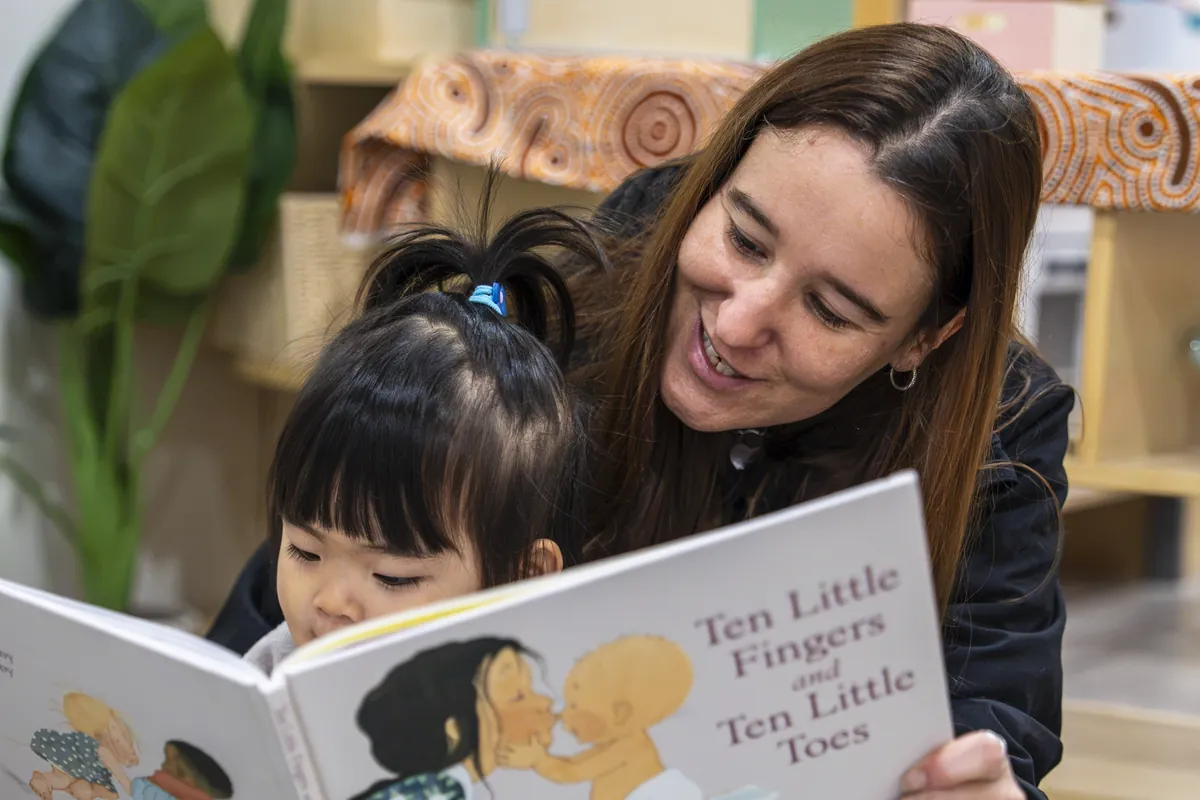
The Abecedarian Approach
Intentional language building, woven through ordinary moments rather than taught as a lesson. Educators narrate, extend and enrich conversation deliberately, which is one of the most evidenced things an early years program can do.

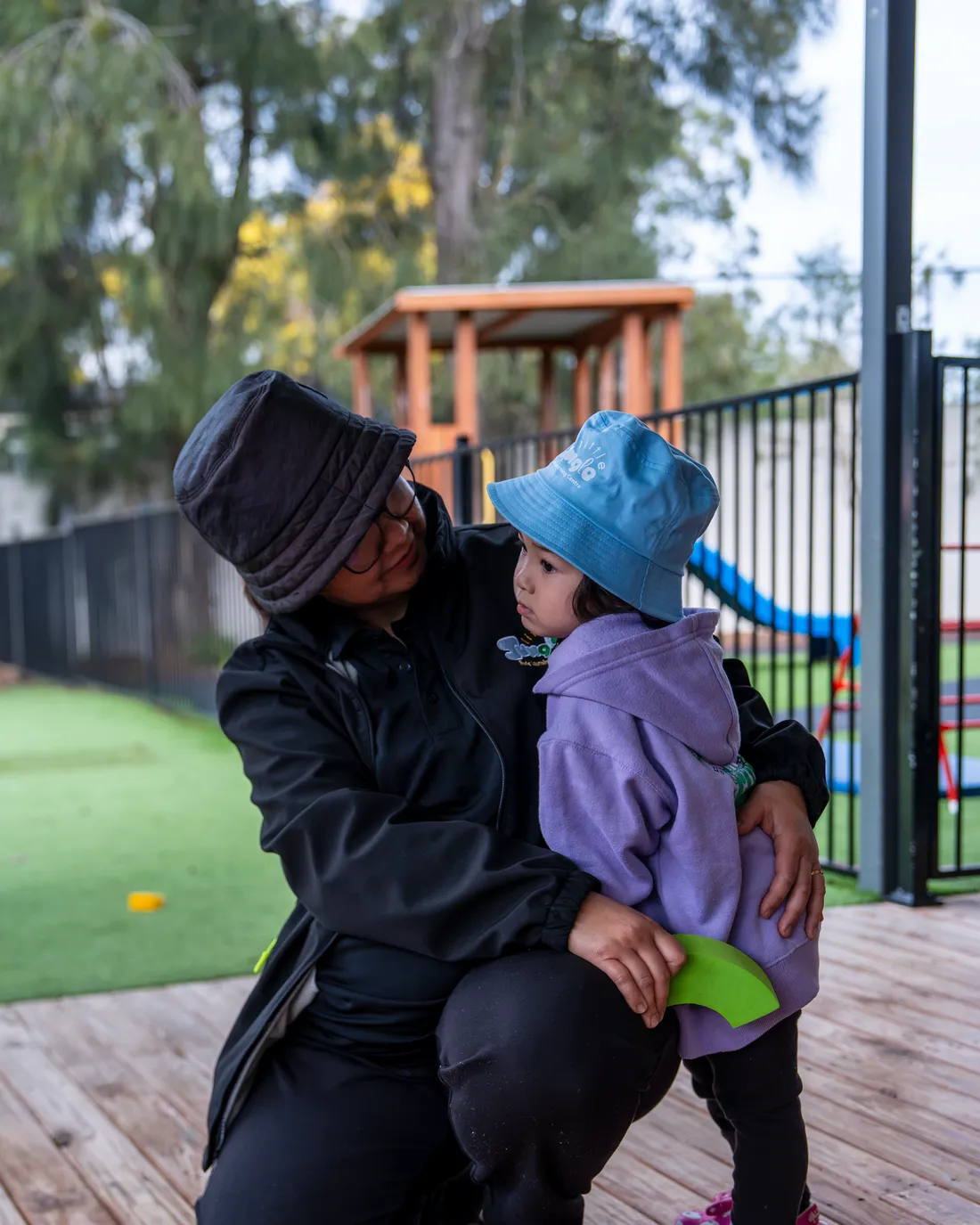
Circle of Security
A relationship framework for reading what a child actually needs in a given moment, whether that is comfort or the confidence to go and explore. It is how we build emotional security, identity and confidence in the earliest years.
Together these create a cohesive model that nurtures the whole child by respecting their natural curiosity.
The same curriculum, three stages
What Steps to Shine is working toward changes as your child does. Five learning goals in each room, building on the one before.
Cuddle Cubs
- Building emotional security through consistent, nurturing relationships
- Encouraging early communication through responsive conversation and gestures
- Supporting physical development through safe and sensory exploration
- Promoting independence through simple choices and self-help opportunities
- Fostering curiosity through play that invites discovery and repetition
Tiny Tigers
- Building independence through daily tasks and self-help routines
- Expanding language and communication through varying interaction
- Developing social skills through group play and guided interaction
- Building emotional awareness and supporting emotional expression
- Fostering creativity through imaginative and sensory experiences
Jungle Explorers
- Introducing early literacy and numeracy through engaging play
- Supporting self-expression through storytelling and discussion
- Extending critical thinking through inquiry and reflection
- Strengthening resilience through challenges and collaboration
- Promoting responsibility through care for self, others, and environment
Our Long Day Care curriculum at Little Jungle is a flexible, inquiry-based approach that ensures every child meets their full potential. Built upon our core Montessori-Reggio philosophy, our program aligns fully with the Australian Government's Early Years Learning Framework (EYLF): Belonging, Being and Becoming. We translate the EYLF's five Learning Outcomes into tangible experiences within our three age-specific childcare environments and programs.

A Reggio-inspired home base for your infant
Our Infant Care program focuses on establishing secure attachments, building responsive relationships, and ensuring optimal wellbeing, the critical foundation for all future learning at our Dundas childcare centre.
Secure Attachments
Goal: To foster deep trust and confidence in the centre environment.
Rationale: We provide consistent, nurturing infant care by primary educators who learn and respond to your child's unique cues and needs. This secure base is essential for emotional regulation and allows your child the confidence to explore, aligning with the core Belonging principle of the EYLF.
Sensory Exploration
Goal: To encourage movement, investigation, and brain development through direct sensory experiences.
Rationale: Following the Reggio Emilia idea of the 'materials as a teacher,' we offer a safe, open-ended environment featuring natural woods, light, water, and textiles. This encourages infants to use all their senses to discover properties like cause and effect, laying the foundation for complex thinking.
Early Communication
Goal: To nurture two-way communication and support the earliest stages of language acquisition.
Rationale: Educators engage in meaningful, responsive conversations (using both verbal and non-verbal language) through songs, stories, and play. We respect the child as an active communicator from birth and support the understanding and expression of their needs and feelings.
Routines & Trust
Goal: To establish predictable, calm daily rhythms.
Rationale: Consistent, predictable routines for feeding, sleeping, and play create a sense of order and security. This predictability minimises anxiety, builds trust in the environment and educators, and supports the child's developing sense of belonging in the world outside the home.
Montessori-guided development of independence and social skills
This transitional stage focuses on developing self-regulation, language explosion, and the ability to manage feelings and social interactions.
Practical Independence
Goal: To build fine motor control, sustained concentration, and a sense of accomplishment.
Rationale: We introduce Montessori Practical Life Activities (e.g., pouring, sweeping, buttoning). Mastering these essential life skills allows the toddler to care for themselves and their environment, which builds incredible self-confidence and a strong foundation for future-focused learning.
Emotional Literacy
Goal: To equip children with the language and skills necessary to recognise, name, and manage their strong feelings.
Rationale: We guide children through social scenarios using gentle language and visual aids. This process reduces frustration, supports self-regulation, and leads to more constructive social play, helping them contribute positively to their small world.
Language & Inquiry
Goal: To facilitate the rapid language explosion typical in this age group and encourage complex thought.
Rationale: Educators engage children in rich, extended conversations, reading, and dramatic play. We move beyond simple questions, facilitating deeper investigation into a topic through dialogue and shared experience, supporting them as confident and involved learners.
Socialisation
Goal: To introduce and practice the skills required for positive group interactions.
Rationale: We guide children in learning the fundamental social skills of sharing, turn-taking, and active listening during small group activities. This is the first step toward understanding collective responsibility and becoming connected with and contributing to the world.
Holistic school readiness and complex project work
Our preschool program integrates project-based learning (Reggio) and focused activity time (Montessori) to ensure your child is socially, emotionally, and academically ready for formal schooling.
Pre-Literacy & Numeracy
Goal: To develop the cognitive skills necessary for reading, writing, and mathematical thinking.
Rationale: We engage with language and mathematical concepts not through rote memorisation, but through play, storytelling, and the manipulation of concrete Montessori materials. This hands-on approach ensures true conceptual understanding, preparing them as effective communicators.
Project Work
Goal: To cultivate sophisticated problem-solving skills and critical thinking.
Rationale: We facilitate long-term, investigative Reggio-inspired projects that are driven by the children's shared interests. These projects require deep research, collaboration, critical evaluation of ideas, and the expression of knowledge through various creative media.
Citizenship & Culture
Goal: To foster an understanding of ethical behaviour, fairness, and cultural diversity.
Rationale: We promote discussions about community responsibility, cultural backgrounds, and different perspectives. This helps children develop a strong, positive sense of identity while connecting with and contributing meaningfully to the larger world.
Focused Work
Goal: To develop the child's inner discipline and ability to focus for extended periods.
Rationale: By allowing dedicated blocks of uninterrupted work time, we honour the child's natural urge for focused activity. This is arguably the most critical cognitive skill for the transition to primary school, supporting their continued wellbeing as confident learners.
Six areas, every week
The "Steps to Shine Curriculum" nurtures each child's curiosity, creativity, and confidence within a positive environment founded on love, care, and safety. Our dedicated educators implement a program inspired by the principles of Montessori and Reggio Emilia, focusing on fostering child-led exploration, personal independence, and the essential skills for lifelong learning.

Foundations for Literacy & Communication
Every conversation, song, and story builds a confident, capable communicator.
Mathematical & Problem-Solving Concepts
From sandpit measuring to preschool numeracy: mathematics lived, not taught.

Creative Arts and Expressive Language
Open-ended creative experiences that develop original thinking and expressive confidence daily.

Holistic Wellbeing and Physical Confidence
Physical confidence and emotional wellbeing built through movement, nutrition, and outdoor exploration.

Social Competence and Emotional Resilience
Empathy, friendship, and emotional regulation supported through consistent educator relationships daily.

Culture, Community, and Sustainability Education
Belonging, respect, and environmental responsibility taught through genuine daily practice.
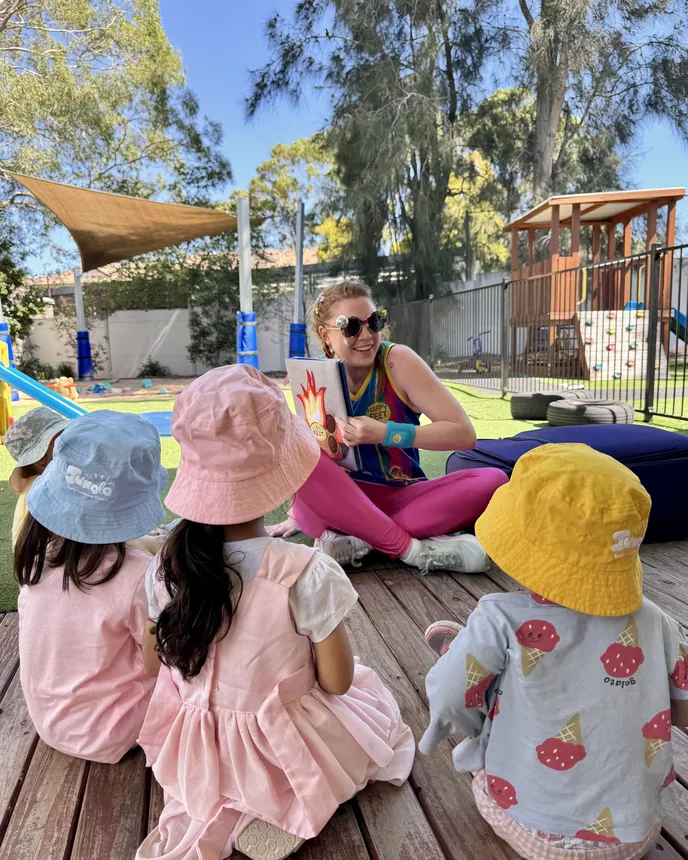
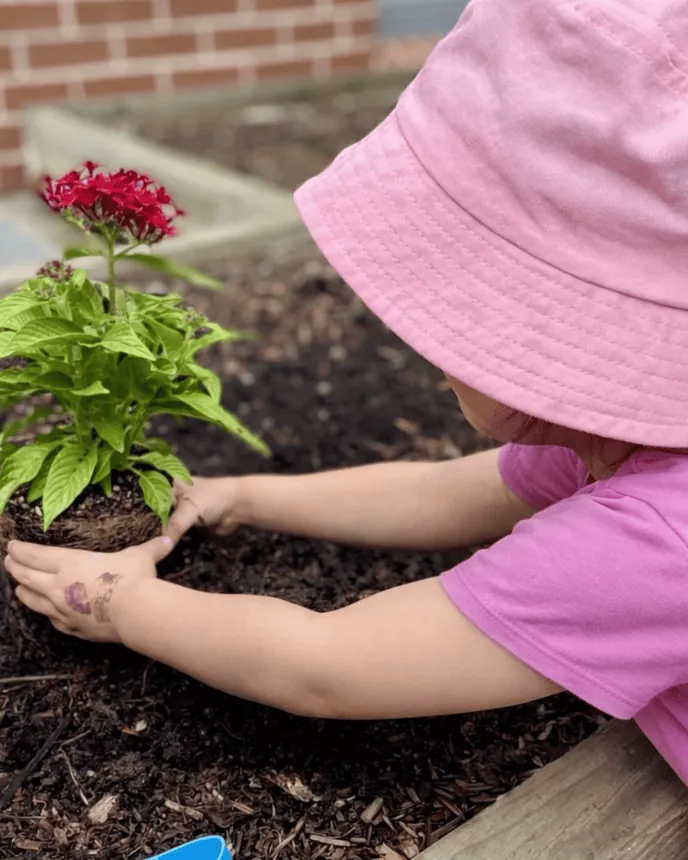
Little Jungle's excursion and incursion calendar runs year-round, connecting children aged 6 weeks to 6 years with the wider Dundas and Rydalmere community. Excursion destinations include local parks, community gardens, libraries, and neighbourhood businesses. Regular incursions feature HappyFeet fitness educators, visual artists, sustainability specialists, and community helpers, each experience purposefully linked to active investigations happening across our Cuddle Cubs, Tiny Tigers, and Jungle Explorers rooms.
Frameworks, and who does what
How this maps to the national frameworks
The Steps to Shine Curriculum is guided by, aligned with, and enriched through Australia's Early Years Learning Framework (V2.0) and the National Quality Framework (NQF). It embodies the vision of the EYLF, ensuring every child experiences learning that is engaging, inclusive, and builds success for life.
In practice, this means our educators plan learning around the ideas of Belonging, Being, and Becoming:
- Belonging. Children feel safe and part of a community.
- Being. Children have time to explore and enjoy the present, valuing the here and now of childhood.
- Becoming. Children are supported to build skills and confidence for the future.
Our curriculum delivers the NQF in action. We align with the Education and Care Services National Law, National Regulations, and National Quality Standard (NQS), so quality is consistent across all areas. Steps to Shine is our whole-of-service approach to early learning, and it satisfies all seven areas of the NQS:
- Educational program and practice
- Children's health and safety
- Physical environment
- Staffing arrangements
- Relationships with children
- Collaborative partnerships with families and communities
- Governance and leadership
Who does what: the centre, the educators, and you
A high-quality curriculum relies on three roles: the direction of our vision, the expertise of our staff, and your involvement as a parent. Together they shape every experience your child has.
The role of the centre. Strong governance anchors quality and direction. We set the vision, maintain compliance with the National Quality Framework, and ensure every action reflects our philosophy of love, care, and safety. We keep environments safe through risk assessment, emergency planning, and regular reviews. Educator-to-child ratios are monitored, and staff meet qualification and training requirements. Ongoing professional training and family feedback drive continuous improvement, while our Quality Improvement Plan ensures our vision evolves with time.
The role of educators. Qualified and professional educators apply pedagogy that responds to each child's needs, interests, and ways of learning. Using intentional teaching and shared decision-making, they design experiences that are meaningful and inclusive. Through observation and reflection, they adapt environments and routines to extend thinking, language, and wellbeing. With warmth and professionalism, they model empathy, communication, and collaboration, creating environments where children feel valued and empowered.
The role of families. The partnership between families and educators evolves into genuine collaboration and shared decision-making around each child's learning pathway. Through educator and family meetings, expert workshops, and participation in excursions, families actively influence the direction and purpose of the curriculum. Your perspectives contribute to the why, how, and what of learning, so experiences stay responsive and relevant. Families receive regular updates and documentation, reinforcing continuity, transparency, and mutual accountability.
School readiness, the simple version
Readiness is not knowing the alphabet. It is being able to separate from you calmly, ask for help, wait a turn, and try something hard without falling apart.
Independent problem-solving
Children who attempt before they ask, and who can tolerate the frustration of not getting it first go.
Confidence to try
A child who volunteers, joins in, and is willing to be wrong in front of others learns faster than one who isn't.
Speaking up
Being able to tell a teacher what they need. The single most useful classroom skill in the first year of school.
See the program in action
Tours run Tuesday, Thursday and Friday during program time, so you see a normal day.
Book a TourFrequently asked questions
What is the Steps to Shine Curriculum?
Steps to Shine is Little Jungle's own curriculum framework, built on Montessori and Reggio Emilia principles within Australia's Early Years Learning Framework. It covers six learning areas progressively from infancy through to school entry, with every child's program individually documented and regularly reviewed by their key educator.
What excursions and incursions does Little Jungle offer?
Our excursion calendar runs year-round and includes visits to local parks, community gardens, libraries, and neighbourhood businesses across Dundas and Rydalmere. Regular incursions bring HappyFeet fitness educators, school collaborators, and community helpers directly into the centre, all included in the daily fee.
Does the curriculum prepare children for school?
Yes. Our preschool program is specifically designed to build school readiness, not just academically, but socially, emotionally, and independently. Children develop literacy, numeracy, and critical thinking alongside the self-regulation and friendship skills that determine how well they transition into school.
Take the first step today
Book a tour, meet our educators and see the rooms on Tuesday, Thursday and Friday.