If there is one topic that comes up in almost every family’s first few weeks at Little Jungle, it is sleep.
How much does my child actually need? Will childcare change their nap? They sleep so well here but won’t nap at home on the weekend — why? And how do I keep things consistent when some days they are with us and some days they are not?
These are good questions. And they deserve a real answer.
So here is what we know, what the research tells us, and how we think about it in each of our rooms.
First — the numbers.
The Sydney Children’s Hospitals Network, drawing on Australian Government guidelines, recommends the following total sleep for young children across a full 24 hours — this includes overnight sleep and any daytime naps.
Babies from birth to three months need around 14 to 17 hours. From four to eleven months, 12 to 16 hours. For toddlers aged one to two years, 11 to 14 hours. And for preschoolers aged three to five, 10 to 13 hours — with naps included if they are still napping.
These are totals, not rules. A toddler who sleeps ten hours overnight and naps for an hour and a half is sitting right where they should be. A baby who wakes a few times overnight but naps well through the day is also likely getting what they need. It is the full picture that matters, not just how the night went.
Every child is different, and these figures are guides — not targets to hit exactly. If you are genuinely worried about your child’s sleep, your GP or child and family health nurse is always a good first conversation.
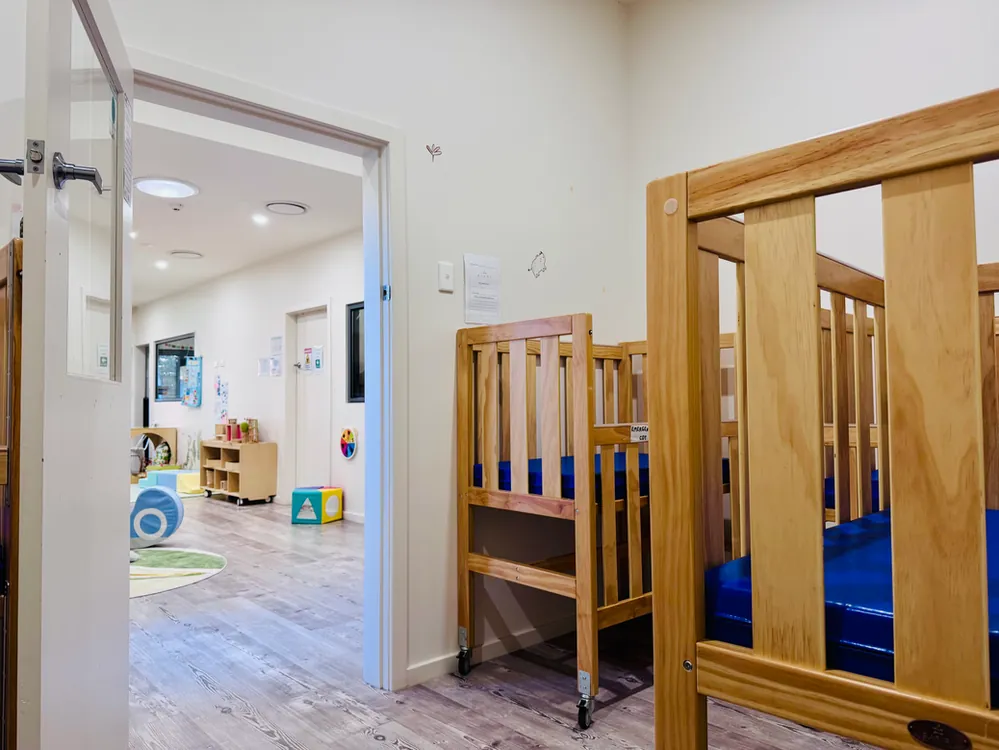
What happens to sleep when childcare starts.
Almost every family notices a shift in their child’s sleep in the first weeks of childcare. This is completely normal, and understanding why it happens usually makes it easier to live with.
Starting somewhere new is genuinely effortful for a young child. New faces, new sounds, new rhythms, new social dynamics — all at once, every day. The brain works hard in that environment. By the end of the afternoon, many children are more tired than their parents have ever seen them.
Some children respond by sleeping longer and more deeply than they ever have. Others become unsettled — overtired, but wired, resistant to going down, waking more during the night. Both are typical responses to a big adjustment.
Give it time. For most children, things settle back into a rhythm within a few weeks once the new environment starts to feel familiar and safe.
The nap question — because there are a few.
The most common one we hear: my child naps at childcare but will not nap at home on the weekend. Is that normal?
Yes. Completely. The rhythm of the day, the group environment, the gentle predictability of a post-lunch rest routine — these things make it easier to settle. Some children are also simply more tired after a morning of social activity and outdoor play than they would be at home. That is not a bad thing. That is their day doing what it is supposed to do.
Another one: my child has stopped napping at childcare. Should I still try at home?
Not necessarily. Most children between three and five years gradually drop their daytime nap — though when exactly varies a great deal from one child to the next. The more useful question is: how is my child managing the late afternoon? A child who is falling apart by four o’clock most days is probably still a child who needs some kind of rest, even if they are not sleeping. A quiet time lying down with a book, or in a darkened room with calm music, can serve a real purpose for children who have dropped the sleep itself but still need the break.
And the tricky one: my child naps late at the centre and then will not go to bed until nine o’clock at night.
We hear this one often. Late naps push bedtime, which pushes the morning, which makes everyone tired, which makes everything harder. If this is happening, please talk to us. We look at each child’s individual rest and we can work with you on timing where it is possible.
Keeping things consistent between home and the centre.
Young children’s brains and bodies thrive on predictability. A regular sleep and wake time — even across the days they are with us and the days they are not — helps everything work more smoothly.
A few things that make a real difference.
Tell us about your child’s routine at home. What time do they usually wake up? Do they have a comfort object or a particular wind-down routine? The more we know, the more we can mirror what already works for them.
Bring comfort items from home. A familiar soft toy, a small piece of fabric that smells like home. These are not extras — they are genuine sleep supports for young children navigating a new environment.
Try to protect the sleep window on your days at home. When children are overtired they often find it harder to settle, not easier. If your child’s natural nap time is around 12:30, a long outing that keeps them awake until two o’clock will likely work against you. In the weeks around starting childcare, protecting that window at home matters more, not less.
And please — expect some disruption, and know it will pass. The weeks around starting childcare, transitioning between rooms, returning from a holiday, going through a growth spurt — all of these can unsettle sleep for a while. It is not a backwards step. It is a child adjusting to something. It always passes.
When to ask for extra support.
Most sleep challenges in the early childhood years are normal and temporary. But some are worth getting help with.
Talk to your GP or child and family health nurse if your child is consistently getting much less sleep than recommended, if the sleep difficulty is genuinely affecting the whole family’s wellbeing, or if you notice anything unusual — very frequent waking, difficulty breathing during sleep, night terrors that seem severe.
The Sydney Children’s Hospitals Network has clear, reliable information on sleep by age and sleep concerns at their Kids Health Hub — and it is where the figures in this post come from. It is worth bookmarking.
Sleep is not a performance. It is not something your child is doing well or badly at, and it is not something you are succeeding or failing at.
It shifts and changes right through early childhood — affected by growth, by big developmental leaps, by starting a new room, by everything in between.
We see it every day. The children going through a rough patch, and the families who are tired right alongside them. You are not alone in it.
Sleep recommendations sourced from the Sydney Children’s Hospitals Network Kids Health Hub, drawing on the Australian Department of Health and Aged Care guidelines. If you have questions about how we handle rest time in any of our rooms, we would love to chat — get in touch, see rest time for yourself on a tour, or speak to your child’s educator at pickup.